The NHS England guidance Staying Safe from Suicide highlights best practice in safety assessments, in an effort to reduce suicide and improve mental health services. The guidance intends to move away from suicide prediction tools/scales and the use of simplistic questions, to a more person-centred approach.
This follows findings from the HSSIB report Assessment of suicide risk and safety planning, which aims to highlight the need to move away from ineffective risk assessment tools in mental health services.
“Every day, 17 people die by suicide in the UK. Of those, five are in contact with mental health services, and four of those five (80%) are assessed as ‘low’ or ‘no’ risk at their last contact. Suicide prediction tools, scales, and stratification (for example, into low, medium, or high risk) are flawed because suicidal impulses are highly changeable and can shift in minutes. The use of static risk stratification, often based on simplistic questions, is still widespread, but it is unacceptable. This guidance sets out a replacement approach that puts safety assessment, formulation, management and planning in the context of relational, therapeutic engagement, which is known to improve outcomes.”
“Instead of stratification, practitioners are recommended to explore risks collaboratively, understand changeable safety factors, and co-produce safety plans. Risk is too variable to rely on static categories—it demands nuanced, relational care.”
Read the full guidance: Staying Safe from Suicide
Related Conference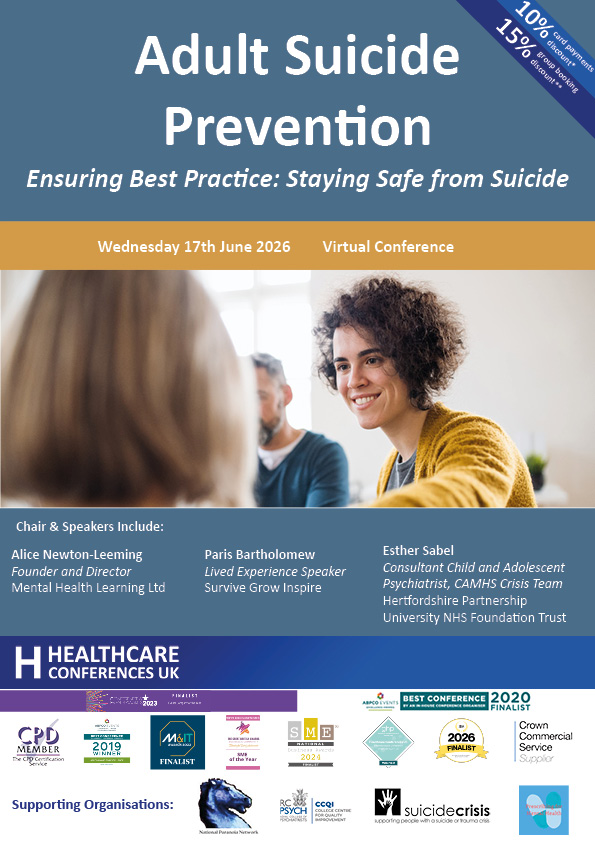
Adult Suicide Prevention: Ensuring Best Practice: Staying Safe from Suicide
Virtual, Online | Wed, 17 Jun 2026
This conference will explore national policy developments, emerging evidence and practical approaches to adult suicide prevention, including learning from the NHS England ‘Staying Safe from Suicide’ guidance, which emphasises compassionate, person-centred responses across all settings.